Edible oil is a daily-use staple with vast, non-negotiable demand — and in most of South Asia and Africa, a large share of it is still imported. That gap between consumption and domestic production is precisely where the opportunity sits: crushing locally grown oilseeds, refining crude oil, and packaging finished product substitutes directly for imports and serves a market that never shrinks. For an entrepreneur near an oilseed-growing region, oil milling and refining is one of the most grounded agro-processing businesses available.
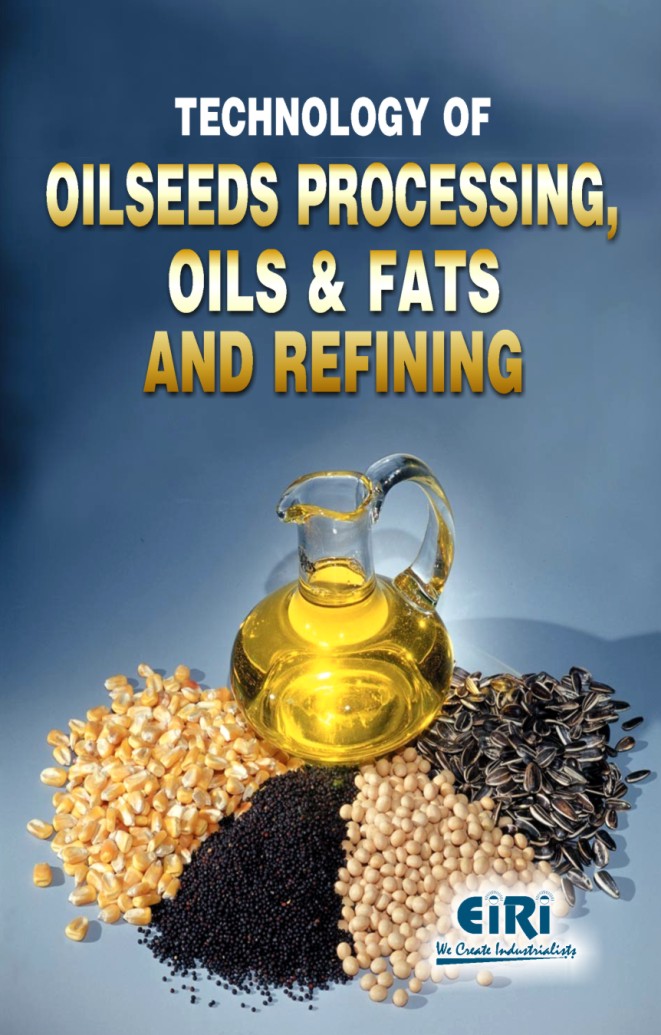
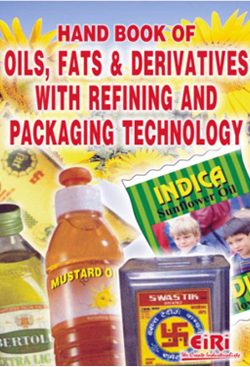
These handbooks cover oilseed processing, oil and fat refining and derivatives, prepared by EIRI's consultants with more than 45 years of industrial project experience.
The technology of oilseeds processing, oils and fats and refining handbook covers the path from oilseed to refined oil, while the handbook of oils, fats and derivatives with refining and packaging technology extends into derivatives and the packaging that finishes the product for market.
The economics of edible oil turn on two things: securing oilseed at a good price, and adding value through crushing, refining and packaging rather than trading raw material. Refining and packaging are what turn a bulk commodity into a branded, shelf-ready product with better margins, and derivatives open further value beyond basic edible oil. The handbooks cover both the core processing and these value-addition steps, along with the plant and machinery involved.
Edible oil processing requires an FSSAI licence in India and equivalent food-safety approval elsewhere, along with quality standards and, for packaged products, labelling requirements. Some oilseed and edible oil activities attract government support and are subject to specific trade policy. Confirm the applicable requirements for your product and location before investing.
Edible oil has large, steady demand, and in many countries substantial volumes are still imported, so domestic crushing and refining can substitute directly against imports. Profitability turns on oilseed sourcing, refining efficiency and packaging. Locating near a growing region strengthens the case.
It depends on your capital and raw-material access. Crushing turns oilseed into crude oil; refining and packaging turn crude oil into a branded, shelf-ready product with better margins. Integrating both captures more of the value chain, which the handbooks cover.
In India, an FSSAI licence is required, along with quality standards and labelling for packaged products. Edible oil is also subject to specific trade and quality policy. Confirm the current requirements with your food-safety authority before investing.
Yes. Alongside these handbooks, EIRI prepares customised Detailed Project Reports for oilseed crushing, oil refining and packaging units, suitable for bank finance and scheme applications and matched to your capacity and location.
Browse the handbooks above to plan your unit, or request a free sample to review the depth first. For a bank-ready project report or customised documentation, send us your requirement.
Speak with our experts and get personalized guidance for your manufacturing business idea, project planning, machinery selection, and investment strategy.