Spice and masala manufacturing is one of the most accessible and enduring food businesses in South Asia and a strong export earner besides. Ground spices and blended masalas are daily-use kitchen staples with unshakeable demand, the raw materials are grown domestically, and a unit can start small — cleaning, grinding, blending and packing — and build a brand from a regional base. The opportunity extends beyond the home market: whole and value-added spices are significant exports, and branded, hygienically packed masala commands a premium over loose product.
These handbooks cover spice processing, masala blending and packaging, prepared by EIRI's consultants with more than 45 years of industrial project experience.
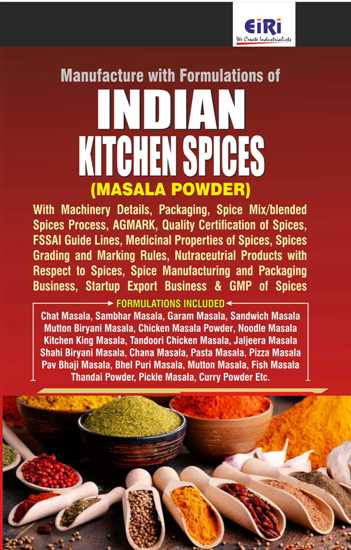
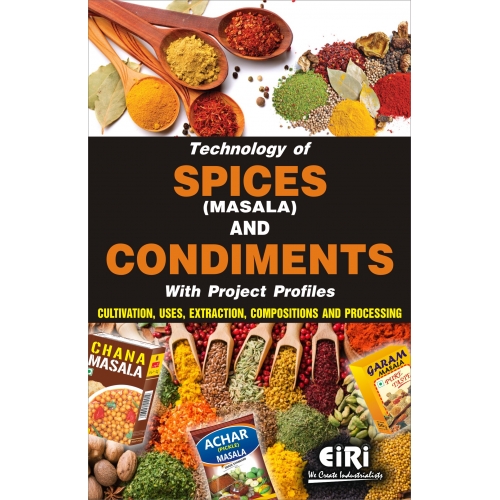
The category includes the guide to Indian kitchen spices and masala powder with formulations — the blended masalas at the heart of the market — the technology of spices and seasoning with formulae, and spices, masala and condiments with project profiles covering cultivation through extraction. The handbook of spices and packaging with formulations adds the packaging that turns processed spice into a branded, shelf-ready product.
The margin in spices comes from processing and branding, not from the raw material. Cleaning, grinding, blending to a consistent recipe, and packing hygienically into branded units transforms a commodity into a trusted product a customer buys repeatedly. Blended masalas in particular — where the recipe is the differentiator — build brand loyalty. The handbooks cover the processing, the blend formulations and the packaging that together create that value.
Spice and masala manufacturing requires an FSSAI licence in India and equivalent food-safety approval elsewhere, along with hygiene compliance and, for packaged products, labelling standards. Export markets apply their own food-safety and quality requirements, which can be strict on contaminants and adulteration. Confirm the requirements for your products and markets before investing.
Spices and masalas are daily-use staples with steady demand and export potential, and branded, hygienically packed product commands a premium over loose spice. Profitability comes from processing and branding rather than the raw material. It is one of the more accessible food businesses to start.
Yes. A spice unit can start small with cleaning, grinding, blending and packing, and grow a brand from a regional base. The handbooks help you understand the process, blend formulations and packaging for a realistic starting scale.
Consistent blend recipes, quality and hygienic packaging build the repeat purchase and brand loyalty that define a successful masala business. The blend formulation is the differentiator, which is why the handbooks focus on formulations alongside processing.
Yes, whole and value-added spices are significant exports, though export markets apply strict food-safety standards on contaminants and adulteration. Meeting these standards is essential for export-oriented production.
Yes. Alongside these handbooks, EIRI prepares customised Detailed Project Reports for spice and masala processing and packaging units, suitable for finance and scheme applications and matched to your products, capacity and location.
Browse the handbooks above to find the guide for your intended product. Each can be purchased and downloaded, or request a free sample to review the depth first. For bank-ready project reports or customised documentation, send us your requirement.
Speak with our experts and get personalized guidance for your manufacturing business idea, project planning, machinery selection, and investment strategy.
.jpg)
.jpg)