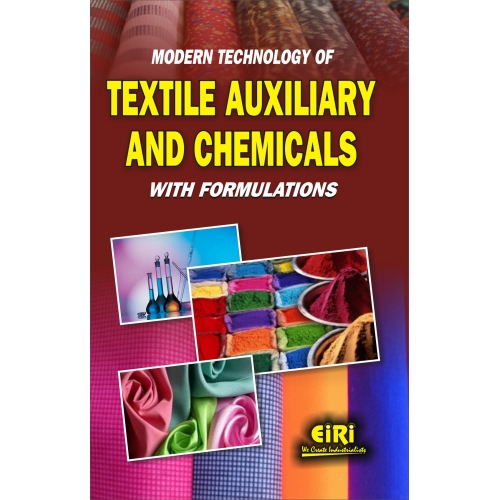
Behind every dyed, printed and finished fabric sits a chemistry the textile mill depends on — dyes, dye intermediates, processing chemicals, enzymes, fixing agents and finishing auxiliaries. Supplying that chemistry is a specialty, business-to-business manufacturing opportunity that rides the textile industry's scale without competing in the crowded garment market. For an entrepreneur with a chemical grounding located near a textile cluster, textile auxiliaries offer steady industrial demand and the healthy margins that come with formulated specialty products.
The category includes textile auxiliaries and chemicals with processes and formulations, modern technology of textile auxiliary and chemicals, technology of textile chemicals with formulations, and the handbook of textile processing chemicals, enzymes, dye fixing agents and finishes. The category also covers nonwoven fabrics, carry bags, composites and geotextiles — a fast-growing technical-textile segment.
Textile chemicals are specialty inputs sold to mills and processors, which insulates the business from the price competition of the garment trade and gives it demand tied to overall textile output. The products are formulation-driven, so technical know-how protects margins, and proximity to a textile cluster provides a ready customer base. The handbooks cover the formulations, processes and chemistry across dyes, auxiliaries and finishing agents.
Textile chemical and dye manufacturing involves chemical processes, so it typically requires environmental and pollution-control clearances — effluent from dye and chemical production is closely regulated — alongside standard registrations and hazardous-materials handling where relevant. Confirm the requirements for your products and location before investing.
They are the dyes, dye intermediates, processing chemicals, enzymes, fixing agents and finishing auxiliaries that textile mills use to dye, print and finish fabric. They are specialty inputs sold to the textile industry rather than consumer products.
It is a specialty business-to-business niche with demand tied to textile output and margins protected by technical know-how, away from the price competition of the garment market. Locating near a textile cluster provides a ready customer base. The handbooks cover the formulations and processes.
Yes. Nonwoven fabrics, geotextiles, composites and medical textiles are a fast-growing technical-textile segment with applications well beyond conventional cloth. A dedicated handbook covers nonwovens, carry bags, composites and geotextiles.
Yes. Alongside these handbooks, EIRI prepares customised Detailed Project Reports for textile auxiliary, chemical and dye units, suitable for finance and scheme applications and matched to your products, capacity and location.
Browse the handbooks above to find the guide for your intended product. Each can be purchased and downloaded, or request a free sample to review the depth first. For bank-ready project reports or customised documentation, send us your requirement.
Speak with our experts and get personalized guidance for your manufacturing business idea, project planning, machinery selection, and investment strategy.