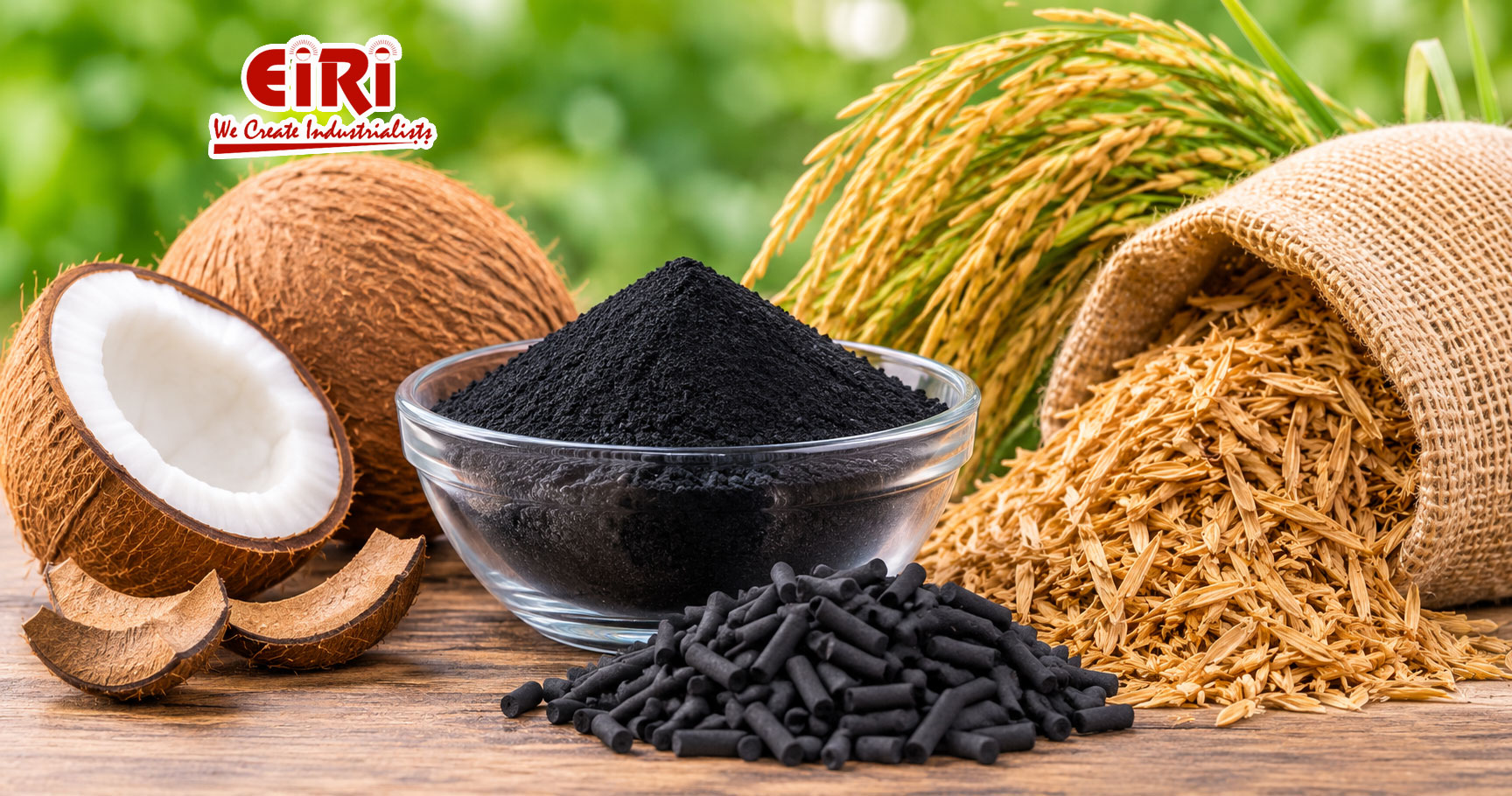
Few manufacturing opportunities convert a low-value input into as valuable an output as activated carbon. The raw materials — rice husk, coconut shell, agricultural residues — are waste streams that farmers and mills generate in enormous quantity. The finished product is a high-value industrial material used in water purification, air filtration, gold recovery, food and beverage processing and pharmaceuticals, with strong domestic and export demand. That gap between an abundant input and a premium output is what makes activated carbon one of the most compelling waste-to-value businesses available to a manufacturing entrepreneur.
It is also a business where the economics have shifted noticeably in the last three years, and anyone evaluating it in 2026 needs to understand how. India is now the world's third-largest producer of activated carbon and the industry has become a genuine export success — but coconut shell charcoal, the premium feedstock, has roughly doubled in price since 2023, Chinese competitors are undercutting Indian product in key markets, and producers have started importing raw material because domestic supply has become the expensive option. This article covers what the business is, how it is made, what actually determines viability, where the Indian industry stands today, and where demand is heading.
What Activated Carbon Is and Why It Sells
Activated carbon is a form of carbon processed to have an enormous internal surface area — a single gram can have a surface area measured in hundreds of square metres — which gives it a remarkable ability to adsorb impurities, contaminants, colours and odours. That property makes it essential across a wide range of industries: municipal and industrial water treatment, air and gas purification, gold and precious-metal recovery, decolourising and purifying in food and pharmaceutical production, and many more.
Two features of that demand matter commercially. First, activated carbon is consumed in use and must be replaced, so demand is recurring rather than one-off — every installed filter bed is a repeat order. Second, the demand is driven by regulation rather than fashion. As water-quality and emissions standards tighten anywhere in the world, the volume of carbon required to meet them rises. That makes the demand curve unusually durable compared with most industrial products, which is the fundamental reason the business is worth examining.
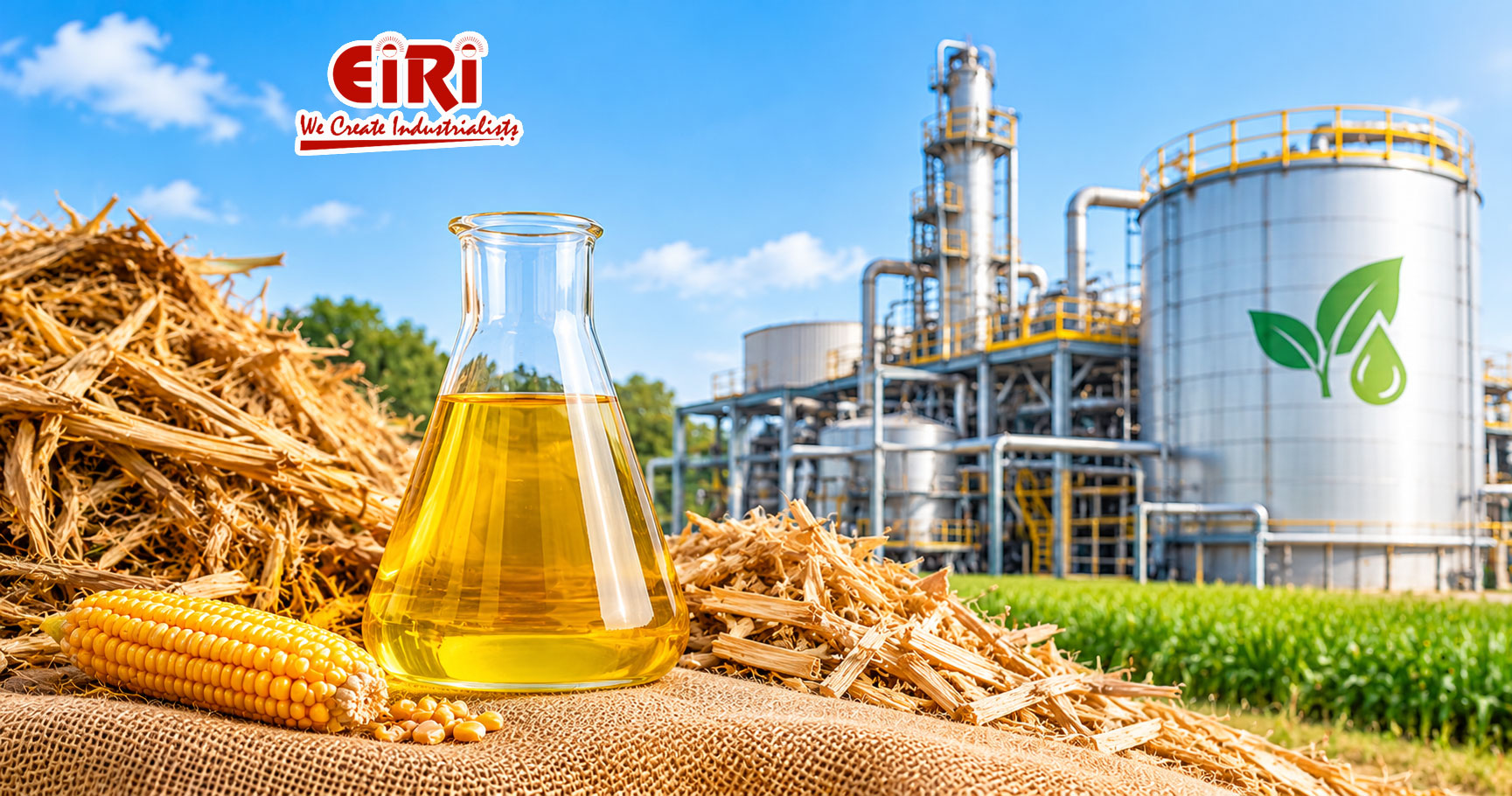
Why Rice Husk and Coconut Shell Are Used
The choice of raw material shapes both the product and the economics, and the two headline feedstocks now sit in quite different positions.
Coconut-shell activated carbon is prized for its hardness and fine pore structure, making it especially suited to water purification, gold recovery and high-grade applications. Countries with abundant coconut — India, Sri Lanka, the Philippines, Indonesia — have a real raw-material advantage, and this is the grade behind India's export business. But it is no longer a cheap input. Coconut shell charcoal, the intermediate that activated carbon plants actually buy, rose from roughly Rs 40 per kg in 2023 to around Rs 85 per kg by FY25, and has traded near Rs 100 per kg since. Domestic charcoal has at points been dearer than imported material, which is why Indian producers have been bringing in charcoal from Sri Lanka through Kochi, Chennai and Tuticorin.
Rice husk and rice husk ash remain an enormous, genuinely under-used agricultural residue, cheap and widely available across India's rice belt. Rice husk also yields silica alongside carbon, opening a second product stream from the same input. Other inputs include wood charcoal, coir pith and various agricultural wastes.
The strategic point for a new entrant is that the gap between these two feedstocks has narrowed in a useful way. When coconut shell charcoal was Rs 40 per kg, it was hard to argue for anything else. At Rs 100 per kg, the economics of rice husk and other residues deserve a serious second look — particularly for applications that do not require coconut shell's hardness. The waste-to-value logic still holds; which waste you build around is now a more open question than it was.
The Indian Industry in 2026: Where Things Stand
India is the world's third-largest producer of activated carbon, with roughly 25 units concentrated in southern India, close to the coconut-growing belt. The industry has grown into a substantial exporter: activated carbon is the single largest contributor to India's coconut product exports, worth about Rs 2,799 crore in FY25 from roughly 1.76 lakh tonnes, up from Rs 2,108 crore the previous year. Across the most recent financial year the industry reported export turnover of around Rs 4,700 crore on roughly 1.80 lakh tonnes, and expected to cross Rs 5,000 crore in the current year.
Set that against the domestic market, estimated at around USD 252 million in 2025 and growing at roughly 4.5 per cent a year, with South India accounting for just under a third of it. The implication is important and often missed: Indian activated carbon is primarily an export industry with a domestic market attached, not the other way round. A project plan built purely on domestic offtake is addressing the smaller half of the opportunity; a project plan built on exports has to clear international quality standards and compete on international price.
On price, India is currently the expensive supplier. Indian activated carbon has been quoted around USD 3,600–3,700 per tonne against Chinese material at USD 2,500–2,700. The gap is structural rather than a matter of efficiency: Chinese producers buy whole coconuts in bulk from Indonesia and the Philippines, which gives them a cheaper feedstock base than Indian manufacturers buying domestic charcoal. Higher freight rates, container availability and geopolitical disruption have widened the delivered-price gap further, and buyers in Europe, the CIS and Russia have been shifting toward lower-cost alternatives including coal-based carbon.
There is also concentration risk worth naming. The United States accounts for roughly 18 per cent of India's activated carbon exports, and US trade policy toward India has been volatile through 2026, with tariff proposals raised, revised and in some cases waived over the course of the year. An export-led project should treat the US share of its order book as a planning assumption to be tested, not a fixture.
None of this makes the business unattractive. Export volumes and values have both grown, and demand across the main markets — the US, UK, Germany, Japan, South Korea and the African gold-recovery market — remains real. But it does mean the industry has moved from a phase where supply was the constraint to one where cost position decides who makes money.
How It Is Made
Production runs in two broad stages: carbonisation and activation. The raw material is first carbonised — heated in a controlled, low-oxygen environment to drive off volatiles and leave a carbon char. That char is then activated, either physically (using steam or hot gases at high temperature to develop the porous structure) or chemically (using activating agents to achieve the same end at different conditions). The activated product is then washed, dried, ground and graded into the forms the market needs — granular, powdered or pelletised — each suited to different applications.
Process control during activation is what determines quality, surface area and therefore price, which is why the technology detail matters. In a market where Indian producers are selling at a premium to Chinese material, that process capability is not a nice-to-have — it is the justification for the price difference. A plant that can reliably hit high-grade water-treatment or gold-recovery specification is competing on quality; one that cannot is competing on price against producers with a structurally cheaper feedstock.
What Determines Viability
Three factors decide whether an activated carbon venture works, and current market conditions have sharpened all three.
Feedstock access and consistency. Locating near reliable coconut-shell or rice-husk supply keeps raw-material cost low and quality steady. With charcoal prices having more than doubled since 2023 and domestic material at times pricing above imports, securing feedstock on predictable terms has moved from a routine operational matter to the central commercial question. Options worth modelling include long-term arrangements with shell suppliers or charcoal producers, captive carbonisation, and feedstock flexibility designed into the plant from the start.
Energy. Carbonisation and activation are thermal, energy-intensive processes, so fuel and power cost materially affect economics. The process can often use its own biomass byproducts for heat, and in a squeezed-margin environment that self-supply is no longer merely a sustainability talking point — it is one of the few cost levers genuinely within an operator's control.
Product grade. The difference between a low-grade decolourising carbon and a high-grade water-treatment or gold-recovery carbon is large in price, and achieving the higher grade depends on process capability. Targeting the right grade for your market and raw material is the core strategic decision, and the one that determines whether you are exposed to commodity price competition or insulated from it.
We avoid quoting specific investment or margin figures because they vary with capacity, feedstock, activation method and target grade. A realistic number for your plan comes from a feasibility study built around those choices.
The Forecast: Where Demand Is Heading
The demand outlook is the strongest part of the case, and it rests on regulation in several separate markets rather than on any single driver.
Water-quality regulation in developed markets. This is the largest single growth driver globally. In the United States, federal drinking-water limits for PFOA and PFOS were finalised at 4 parts per trillion, with public water systems required to complete initial PFAS monitoring by 2027 and to meet treatment requirements by 2029 — a deadline the EPA has proposed extending to 2031, alongside a proposal to rescind limits for several other PFAS compounds. Both remain proposals rather than final rules, and several states including New Jersey, Michigan and New York have set their own standards regardless. Granular activated carbon is one of the three technologies the EPA identifies as effective for PFAS removal, and because the media saturates and must be replaced on a schedule, compliance translates into recurring tonnage rather than a one-time installation.
Domestic Indian demand. The home market is smaller but growing steadily, driven by urban drinking-water supply including programmes such as the Jal Jeevan Mission, new industrial wastewater treatment capacity, tightening pollution-control rules, and demand from pharmaceuticals and specialty chemicals. Water treatment is the fastest-growing end use within India, projected at a little over 5 per cent a year.
Gold recovery. Granular activated carbon is consumed in gold extraction, and demand in that segment follows mining activity and gold prices. Africa is a significant market for Indian producers in this application.
Global market size. Published forecasts for the global activated carbon market vary widely — estimates for 2025 cluster around USD 8 billion, with projections to 2030 and 2031 ranging from roughly USD 5.5 billion to USD 15.7 billion depending on what each analyst counts, and implied growth rates spanning about 9 to 14 per cent a year. That dispersion is itself worth noting: the direction of travel is clearly upward and regulation-led, but anyone quoting a single confident number for this market is choosing one report over several that disagree. Asia-Pacific is consistently identified as the largest regional market.
The honest reading is that demand growth is not the risk in this business. Cost position is. An entrant who can secure feedstock affordably and run an energy-efficient plant to a high grade will find buyers; one who cannot will be competing on price in a market where another country's producers have a cheaper raw material base.
Where Activated Carbon Fits in the Bigger Picture
Activated carbon sits at the intersection of two strong themes. As a waste-based industry, it turns agricultural residue into value; as part of the biofuels and biomass family, it shares feedstock and thermal-processing logic with bioenergy production. That overlap is a practical advantage: an entrepreneur assessing a biomass or rice-husk project can evaluate activated carbon alongside energy products using much of the same feedstock analysis.
That comparison is more valuable now than it used to be, because the relative economics have moved. Where coconut shell charcoal has repriced upward, rice husk has not, and an entrepreneur whose real asset is access to rice-mill residue should weigh activated carbon against silica recovery, biomass energy and compressed biogas from the same input rather than assuming one answer. For the dedicated industry overview, EIRI maintains a guide on how to start an activated carbon industry, and the detailed production technology — including activated carbon from rice husk, straw, coconut and cashew-nut shell, coir pith and wood charcoal — is covered in the biomass and biofuels handbooks.
Licences and Compliance
An activated carbon unit needs standard business and MSME registration, factory licensing, and environmental and pollution-control clearances given the thermal processing, emissions and effluent involved. Product intended for food, pharmaceutical or potable-water use must meet the relevant purity and quality standards, which can be exacting and are important for both premium pricing and export.
For an export-oriented plant, compliance is a commercial asset rather than a cost of doing business. International buyers in water treatment and pharmaceuticals specify to standards such as those governing potable-water media, and the ability to certify to them is part of what justifies a price above commodity Chinese material. Confirm the requirements for your target applications and markets before investing, since they differ by destination and by application.
Evaluating an Activated Carbon Project
A bankable activated carbon project documents the feedstock source and its consistency, the activation technology and target product grade, plant and machinery, energy strategy, environmental compliance, the target applications and markets, and financial projections tested against feedstock and energy cost.
Given how the market has moved, three further tests belong in that document. The first is a feedstock price sensitivity run against a charcoal cost well above today's, since the last three years have shown how far and how fast that input can move. The second is a landed-cost comparison against competing imported material in your target export markets, because that is the price you will actually be bid against. The third is a market-concentration check — what happens to the plan if a major destination market becomes harder to serve on tariffs or freight.
Engineers India Research Institute — 45+ years, ISO 9001-2015 certified, MSME-registered — prepares Detailed Project Reports for activated carbon and waste-to-value ventures, customised to your feedstock, capacity and location. India's own experience as a major processor of coconut and agricultural residues makes that engineering and cost knowledge directly relevant.
Frequently Asked Questions
Is activated carbon manufacturing profitable?
It can be attractive because it converts agricultural residue into a high-value product with recurring, regulation-driven demand across water treatment, air purification and many industries. However, the margin picture has tightened: coconut shell charcoal has roughly doubled in price since 2023 and Indian producers face lower-priced competition in export markets. Profitability now depends heavily on securing feedstock at a predictable cost, running an energy-efficient process, and achieving a product grade that justifies a price premium rather than competing as a commodity.
Which is better feedstock, rice husk or coconut shell?
They suit different products. Coconut-shell activated carbon is hard with a fine pore structure, ideal for water purification, gold recovery and high-grade uses, and it is the basis of India's export business. Rice husk is an abundant residue that also yields silica and suits other grades. The cost gap between them has narrowed sharply, since coconut shell charcoal has repriced upward while rice husk has not, so rice husk deserves more serious evaluation than it did a few years ago. The right choice depends on local availability and the product grade you intend to target.
How is activated carbon produced?
In two stages: carbonisation, where the raw material is heated in low oxygen to leave a carbon char, and activation, where the char is treated with steam or activating agents to develop its porous, high-surface-area structure. The product is then washed, dried, ground and graded into granular, powdered or pelletised forms. Process control during activation determines quality and price, and in a competitive market it is what justifies selling above commodity grades.
What industries buy activated carbon?
Water and wastewater treatment, air and gas purification, gold and precious-metal recovery, food and beverage processing, pharmaceuticals, and many industrial purification applications. Because it is consumed in use and replaced on a schedule, demand recurs, and tightening water-quality and environmental regulation steadily increases it. For Indian exporters the main destinations are the United States, United Kingdom, Germany, Japan, South Korea and African markets using carbon for gold extraction.
How big is India's activated carbon industry?
India is the world's third-largest producer, with roughly 25 units concentrated in southern India. Activated carbon is the largest single contributor to India's coconut product exports, worth about Rs 2,799 crore in FY25 from roughly 1.76 lakh tonnes. Industry export turnover reached around Rs 4,700 crore in the most recent financial year, with expectations of crossing Rs 5,000 crore. The domestic market is considerably smaller at roughly USD 252 million, which means this is primarily an export industry with a domestic market attached.
Why is Indian activated carbon more expensive than Chinese?
The difference is mainly structural rather than a matter of plant efficiency. Chinese producers buy whole coconuts in bulk from Indonesia and the Philippines, giving them a cheaper feedstock base than Indian manufacturers purchasing domestic coconut shell charcoal, which has risen steeply in price. Higher freight rates and container availability have widened the delivered-cost gap further. Indian material has recently been quoted around USD 3,600 to 3,700 per tonne against Chinese material at USD 2,500 to 2,700, which is why competing on quality and grade matters more than competing on price.
What is driving future demand for activated carbon?
Regulation, principally around water quality. In the United States, federal PFAS drinking-water limits require public water systems to complete monitoring by 2027 and meet treatment requirements by 2029, with an extension to 2031 proposed; granular activated carbon is one of the technologies the EPA identifies as effective, and because the media saturates it generates recurring replacement demand. In India, urban drinking-water programmes, industrial wastewater treatment and tightening pollution norms are growing the domestic market, with water treatment the fastest-growing end use. Gold recovery adds a further demand stream tied to mining activity.
Is activated carbon a good export product?
Yes, and for India it is the larger part of the opportunity, with export turnover well above the size of the domestic market. Coconut-shell activated carbon in particular has strong international demand. The qualifications are that export markets apply strict purity and quality standards, that Indian material currently sells at a premium to Chinese competition so grade and consistency must justify the price, and that market concentration carries risk — the United States alone accounts for roughly 18 per cent of India's activated carbon exports, and trade policy toward India has been unsettled through 2026.
Planning an Activated Carbon Unit?
If you are evaluating an activated carbon project from rice husk, coconut shell or other biomass and need bank-ready documentation, EIRI can prepare a Detailed Project Report matched to your feedstock, capacity and target grade — including the feedstock-cost and landed-price sensitivity work the current market calls for. Send us your requirement and our consultants will respond. To explore related waste-to-value and bioenergy options, browse our biofuels and biomass and waste-based industry business books.
Market figures, prices and regulatory positions cited here reflect the position as of November 2026 and draw on industry trade reporting, the Activated Carbon Manufacturers Association of India, US EPA rulemaking and published market research. Feedstock prices and trade policy in this sector have moved quickly; confirm current figures before relying on them for investment decisions.