Ethanol from Agricultural Waste: Is It a Viable Business in 2027?
Ethanol has moved from a niche industrial chemical to a national energy priority. India's ethanol blending programme — mixing ethanol into petrol to cut oil imports and emissions — drove a decade of investment, and the push toward using agricultural waste and surplus biomass as feedstock, rather than food-grade grain, opened a genuine opportunity for new producers.
But the market an entrepreneur walks into in 2027 is not the one that existed three years ago. India hit its 20 per cent blending target in 2025, five years ahead of the original 2030 deadline, and the government has since said repeatedly that it has no immediate plan to go beyond E20. Meanwhile distillery capacity kept being built. The result is that ethanol has flipped from a shortage market to a surplus one — and "there is demand and policy support" is no longer, by itself, an investment case. This article looks honestly at whether an ethanol-from-agricultural-waste venture is viable in 2027, what has changed, and where the demand is actually going next.
What Changed: From Shortage to Surplus
For most of the blending programme's life, oil marketing companies could not buy enough ethanol. That is no longer the position. Industry estimates put national ethanol production capacity at over 20 billion litres a year, with further plants under construction. Against that, blending petrol to E20 absorbs roughly 11 billion litres a year, and liquor, pharmaceutical and chemical users take another 3 to 3.5 billion litres. The arithmetic leaves several billion litres of installed capacity without a buyer.
Two developments at the start of the 2026-27 ethanol supply year, which began in November 2026, show how that surplus is now being managed. First, the oil marketing companies' procurement tender — around 11 billion litres, issued in mid-October 2026 — excluded ethanol made from sugarcane juice, sugar syrup and B-heavy molasses altogether, in order to protect domestic sugar supplies. Second, the procurement price for maize-based ethanol was cut from Rs 71.86 to Rs 68.86 per litre, reducing the margin for grain distillers.
Read together, those two moves tell a new entrant something important: offtake volume is capped by petrol consumption growth, which is running at single digits, while the government retains the ability to switch feedstocks in and out of eligibility and to move the price. A plant designed around one feedstock and one assumed price is exposed on both sides.
This does not mean the programme is in trouble. It means the easy phase is over. The blending target has been met; the question has shifted from "can India produce enough ethanol?" to "what else can India do with the ethanol it can already produce?"
Why Ethanol Demand Is Still Real — but Now Capped
The underlying demand driver remains unusually strong for a manufacturing venture. It is not a consumer trend that could fade; it is national policy backed by blending obligations and institutional procurement. Oil marketing companies buy ethanol to blend into petrol, which gives producers a large, creditworthy buyer rather than a fragmented retail market. That removes the single biggest risk most new manufacturers face: finding customers.
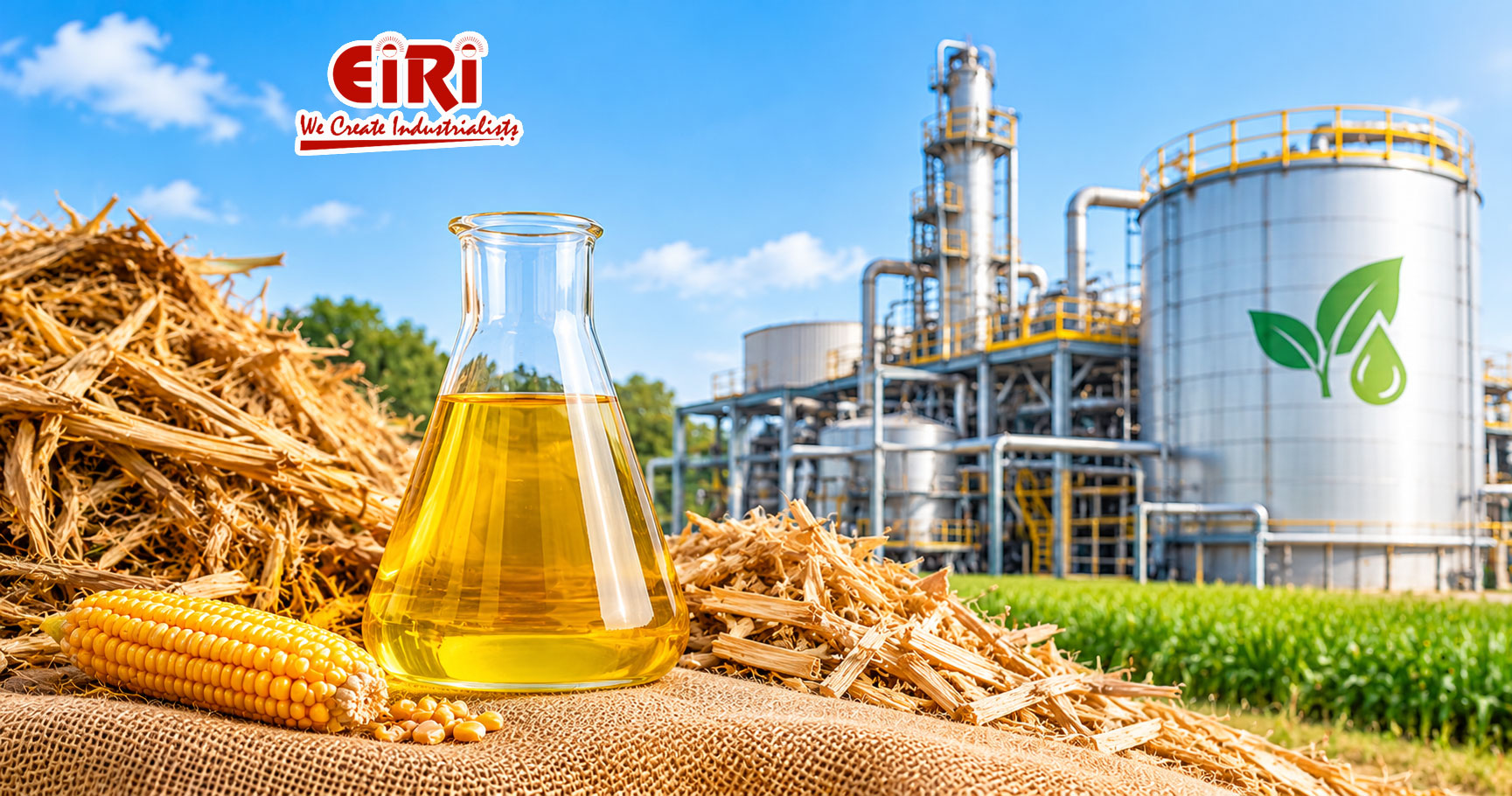
The deliberate shift toward second-generation (2G) ethanol — made from crop residues, agricultural waste and non-food biomass instead of sugarcane or grain — remains policy-favoured, because it avoids the food-versus-fuel tension and puts otherwise-burned crop residue to use. As pressure mounts on both sugar diversion and grain use, that argument has become stronger, not weaker.
What has changed is the ceiling. The petroleum ministry has stated that blending will remain at 20 per cent for now, and that moving higher would require fresh technical studies, consultation with vehicle manufacturers and a separate policy decision. E85 exists but only for certified flex-fuel vehicles, which are a small and slow-growing part of the fleet. So for a project being planned in 2027, the realistic assumption is that road-fuel ethanol demand grows roughly in line with petrol consumption — not in step with blending-rate increases.
The Honest Catch: Feedstock and Scale
Here is where realism matters. Ethanol production is not a small-shed business, and the viability of an agricultural-waste venture turns almost entirely on two things.
The first is feedstock security. Agricultural residue is cheap, but it is seasonal, bulky, scattered across many farms and expensive to collect and transport. A plant that cannot guarantee a steady, affordable supply of biomass will not run economically, however strong the demand for its output. Securing feedstock — through farmer aggregation, collection logistics, baling equipment and storage — is the real business problem, and it has to be solved before capital is committed, not after. In a surplus market with compressed procurement prices, the margin for a sloppy feedstock cost assumption has narrowed considerably.
The second is scale and technology. Converting lignocellulosic agricultural waste into ethanol is technically harder than fermenting sugar or starch; it is capital-intensive and scale-sensitive, and the commercial plants built in India so far have taken years to reach steady operation. Grain and molasses-based ethanol is more established and more accessible to a mid-sized entrant — but that is precisely the segment where capacity now exceeds offtake. Which route fits depends on your capital, your feedstock and your risk appetite, and in the current market it is a decision that belongs in a feasibility model rather than a hunch.
The 2G Route: Where Agricultural Waste Still Has a Tailwind
Second-generation ethanol is supported under the Pradhan Mantri JI-VAN Yojana, which provides financial assistance for 2G bio-ethanol projects using cellulosic and lignocellulosic biomass. Six commercial and four demonstration plants have been approved under the scheme, spread across Haryana, Odisha, Punjab, Assam, Karnataka, Andhra Pradesh, Bihar and Maharashtra, with public sector oil companies behind most of the commercial units. IOCL's plant at Panipat was the first commercial 2G facility dedicated to the nation, and others at Bathinda, Bargarh and Numaligarh have followed through construction.
Two things follow from that list for a private entrant. The encouraging one: 2G capacity in India is still measured in a handful of plants, not hundreds, so this is not the crowded segment. Residue-based ethanol is also the category most likely to be protected if the government further restricts food-crop feedstocks, as the 2026-27 tender shows it is willing to do. The sobering one: these projects have been undertaken largely by state oil companies with deep balance sheets and long time horizons, which is itself a statement about the capital intensity and commissioning risk involved.
The practical implication is that agricultural-waste ethanol rewards entrants who can either operate at genuine scale with patient capital, or who find a differentiated position — a secured residue catchment, a co-located host industry, a byproduct stream that carries part of the cost — rather than competing as a generic supplier into the blending tender.
The Forecast: Where Demand Goes After E20
The surplus described above is the reason policy attention has shifted from producing more ethanol to finding more uses for it. Several of those uses are now moving from discussion into mandate, and they are what a project planned in 2027 should be positioned against.
Aviation fuel. This is the clearest new demand signal. India has approved a roadmap for sustainable aviation fuel blending on international flights of 1 per cent from 2027, 2 per cent in 2028 and 5 per cent by 2030, and has permitted ethanol blending into aviation turbine fuel. An ethanol-to-jet facility is being developed near Visakhapatnam by NTPC Green Energy and GPS Renewables. SAF volumes will be small against road fuel at first, but the price point is higher and the trajectory is mandated rather than aspirational.
Ethanol as cooking fuel. A policy framework is under consideration that would let consumers refill ethanol canisters at dedicated dispensing points for purpose-built stoves, complementing LPG and cutting import dependence. This is at an earlier stage than SAF and should not be modelled as committed demand, but it indicates the direction of official thinking about absorbing surplus capacity.
Flex-fuel vehicles. Draft CAFE-III norms propose incentives linked to biofuel use, which would encourage vehicles capable of running on blends above E20. This is the route by which the road-fuel ceiling eventually lifts — gradually, through fleet turnover, rather than by a change in the blending percentage.
Exports. Nepal, Bangladesh and Indonesia have blending targets with limited domestic production, and Indian producers are exploring supply into those markets. Export economics depend on logistics and on policy permitting it, so this is an option rather than a plan.
Compressed biogas — the adjacent mandate worth watching. For an entrepreneur whose real asset is access to agricultural residue, the CBG blending obligation may matter more than ethanol policy. Blending of compressed bio-gas into CNG and piped natural gas became mandatory from FY 2025-26 at 1 per cent, rising to 3 per cent in FY 2026-27 and 4 per cent in FY 2027-28, with 5 per cent targeted for FY 2028-29. Unlike ethanol, that is a demand obligation that is still climbing, against a supply base that is far less built out. The same biomass aggregation capability serves both.
The honest summary of the forecast is this: ethanol demand in India will keep growing, but over the next few years it grows through new applications and new mandates rather than through a higher petrol blend. Projects that are financed on an assumption of E25 or E30 arriving soon are financed on an assumption the government has explicitly declined to make.
Where Ethanol Sits in a Wider Bioenergy Opportunity
One of the smarter ways to think about an agricultural-waste venture is not "ethanol only" but "biomass-to-value," because the same feedstock and the same waste-to-energy logic support a family of products. Biogas, biomass energy, and high-value byproducts can share infrastructure and feedstock logistics with ethanol, improving overall economics and spreading risk. Given how the ethanol and CBG markets have diverged, that diversification argument is considerably stronger in 2027 than it was when ethanol alone looked short of supply. EIRI's handbook on ethanol, biofuel and bioenergy-based products covers exactly this spread — ethanol as a biofuel, biodiesel, biogas, bio-chemicals and energy from wood and industrial wastes — which is a useful way to see where the strongest fit for your resources lies. The broader category of biofuels and biomass production covers the core routes, and the overlapping waste-based industry category covers the waste-to-value angle more broadly.
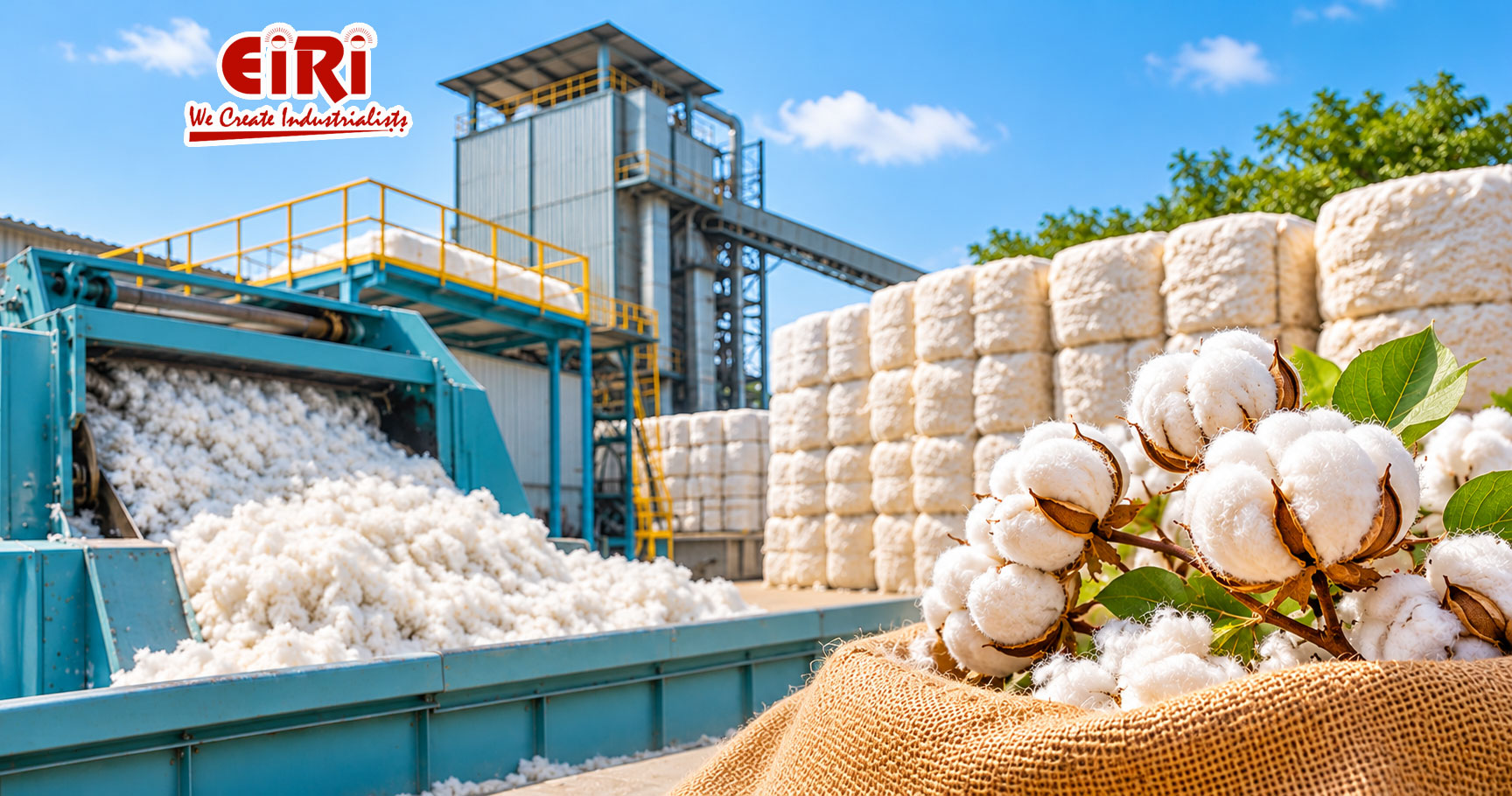
A notable adjacent opportunity worth knowing: the same agricultural residues that feed ethanol — rice husk, for instance — can also be converted into activated carbon, a genuinely high-value product used in water and air purification. For some entrepreneurs, a higher-value, less scale-sensitive waste-to-value product is a better entry point than ethanol itself, particularly while ethanol offtake is capped and procurement prices are being trimmed.
Licences and the Regulatory Reality
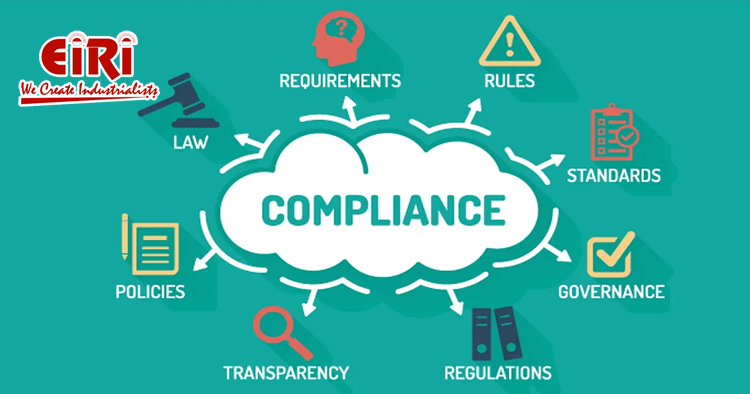
Ethanol is a regulated product. Production involves excise licensing, environmental clearance and pollution-control consent, and selling into the blending programme means meeting the specifications and procurement processes of the oil marketing companies. The regulatory pathway is real and takes time, and it should be mapped early because it affects both your timeline and your financial model.
Two points deserve particular attention in the current environment. First, eligibility is not permanent: the exclusion of sugarcane-route ethanol from the 2026-27 tender shows that which feedstock qualifies for the programme can change between supply years. Second, procurement price is administratively set and can move down as well as up. Government schemes have supported ethanol and biomass projects with interest subvention and other incentives at various points; confirm the current schemes and their terms, since these change.
So, Is It Viable in 2027?
The honest answer is narrower than it would have been three years ago: yes for the right entrant, with secured feedstock, at a scale that can be financed, and with a route to market that does not depend solely on the petrol blending tender — and no for someone treating it as a simple small-industry play, or assuming the blending rate will rise.
The demand is genuine and policy-backed, which is still a real advantage. But the balance of risk has shifted from market risk to margin risk. With capacity ahead of offtake, administratively set prices under downward pressure and feedstock eligibility subject to change, the projects that work will be the ones that can demonstrate a defensible cost position and more than one buyer. For many entrepreneurs with access to agricultural residue, the better-returning answer may turn out to be compressed biogas, activated carbon or biomass energy rather than ethanol — which is exactly the comparison a feasibility study exists to settle before capital is committed.
Evaluating an Ethanol or Bioenergy Project
A bankable ethanol project needs to demonstrate, in documented detail: the feedstock source and a realistic collection and cost model, the chosen technology and scale, plant and machinery, the offtake route into the blending programme, utility and environmental compliance, and financial projections that survive a sensitivity check on feedstock cost.
In the present market, two further tests belong in that document. One is a price sensitivity run against a lower administered procurement price, not just a higher feedstock cost, since both have moved against producers recently. The other is a comparison against the alternative uses of the same biomass — CBG in particular, where the blending obligation is still rising — so that the choice of product is a reasoned conclusion rather than a starting assumption. Engineers India Research Institute — 45+ years, ISO 9001-2015 certified, MSME-registered — prepares Detailed Project Reports for ethanol, biofuel and biomass ventures, built around your specific feedstock, capacity and location rather than a generic template.
Frequently Asked Questions
Is ethanol production profitable in India in 2027?
Ethanol still benefits from policy-backed demand through the national blending programme, which gives producers a large institutional buyer. However, the market has tightened considerably: India met its 20 per cent blending target in 2025, installed capacity has overshot what blending and industrial users absorb, and procurement prices for some feedstocks have been reduced. Profitability now depends less on finding a buyer and more on holding a defensible cost position, securing affordable feedstock and having a route to market beyond the petrol blending tender.
Will India increase ethanol blending beyond 20 per cent?
Not in the near term, on current official statements. The petroleum ministry has said blending will remain at 20 per cent for now, and that any increase would require further technical studies, consultation with vehicle manufacturers and a separate policy decision. Higher blends such as E85 are available only for certified flex-fuel vehicles. A project plan should not assume E25 or E30 within its payback period.
What agricultural waste can be used to make ethanol?
Second-generation ethanol uses crop residues and non-food biomass such as rice straw, husk, bagasse and other agricultural waste. These are favoured by policy because they avoid the food-versus-fuel issue and use residue that is often otherwise burned — an argument that has strengthened as the government has restricted sugar and grain diversion. The challenge is that such biomass is seasonal, bulky and costly to collect, so feedstock logistics are central to viability.
What is the biggest risk in an ethanol business?
Feedstock security remains the fundamental operating risk: a plant that cannot guarantee a steady, affordable supply of biomass will not run economically regardless of demand. Alongside it sits policy risk, which has become more visible — both the eligible feedstock list and the administered procurement price can change between supply years, as the 2026-27 tender demonstrated. Both should be stress-tested before committing capital.
Who buys the ethanol produced?
Under the blending programme, oil marketing companies are the primary buyers, blending ethanol into petrol, and liquor, pharmaceutical and chemical manufacturers take a further share. This institutional offtake is a major advantage over fragmented retail markets, but it means meeting the specifications and procurement processes of those companies — and accepting that tender volumes and prices are set administratively.
Where will new ethanol demand come from after E20?
The most concrete new avenue is aviation: India has approved sustainable aviation fuel blending on international flights of 1 per cent from 2027, rising to 2 per cent in 2028 and 5 per cent by 2030, and has permitted ethanol blending into aviation turbine fuel. Other avenues under development include ethanol as a cooking fuel, flex-fuel vehicles encouraged through draft efficiency norms, and exports to neighbouring countries with blending targets but limited production. These are growing from a small base, so they change the medium-term picture rather than the next two years.
Are there lower-complexity alternatives to ethanol from waste?
Yes, and they currently deserve serious comparison. The same agricultural residues can feed compressed biogas, biomass energy or activated carbon from rice husk. Compressed biogas is particularly worth examining: its blending obligation in CNG and piped natural gas is mandatory and still rising — 1 per cent in FY 2025-26, 3 per cent in FY 2026-27, 4 per cent in FY 2027-28 and a 5 per cent target for FY 2028-29 — against a much less built-out supply base than ethanol. These routes can also be less scale-sensitive than cellulosic ethanol.
Thinking About an Ethanol or Bioenergy Venture?
If you are weighing an ethanol-from-waste project and need to test whether the numbers work before committing, EIRI can prepare a Detailed Project Report built around your feedstock, scale and location — including a comparison against the alternative uses of the same biomass. Send us your requirement and our consultants will respond. To explore the full range of routes, browse our biofuels and biomass business books.
Policy positions, procurement prices and blending obligations cited here reflect the position as of November 2026, at the start of the 2026-27 ethanol supply year. Ethanol policy in India changes frequently; confirm current tender terms, eligible feedstocks and scheme conditions before relying on them for investment decisions.